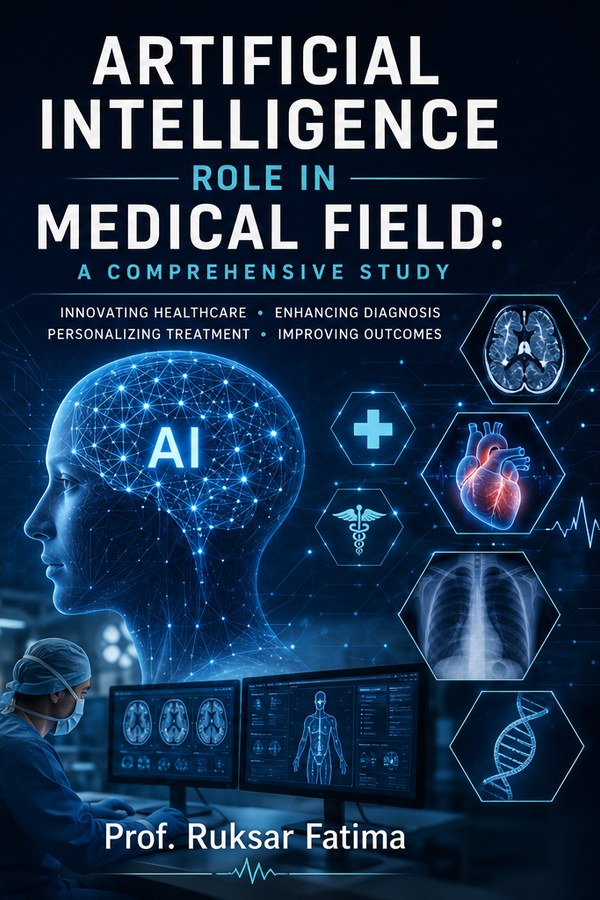
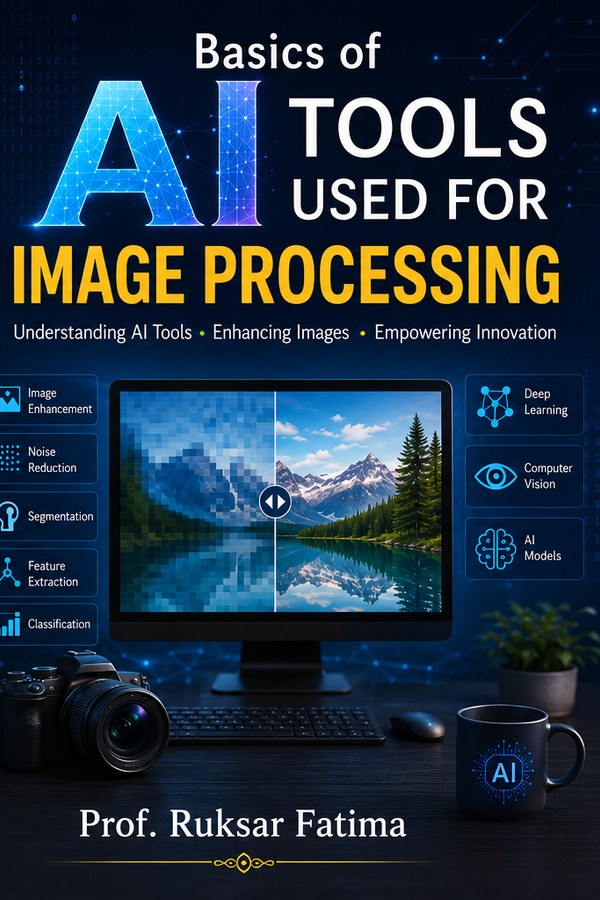
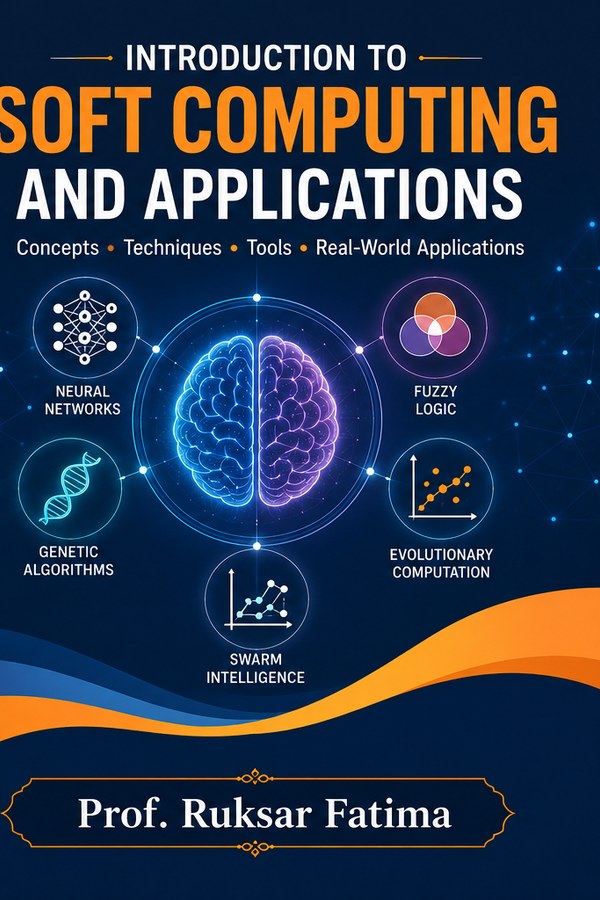
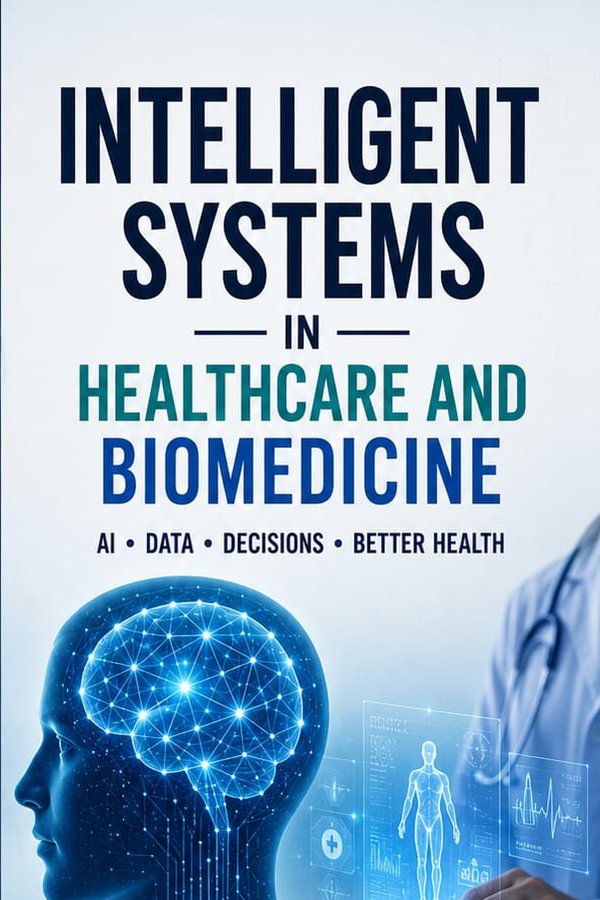
Professor, Faculty of Engineering & Technology at Khaja Bandanawaz University — over two decades advancing research in medical image processing, artificial intelligence, and engineering education.
An accomplished academic professional with over two decades of progressive experience in the education sector, holding pivotal roles at Khaja Banda Nawaz University and KBN College of Engineering.
Expertise encompasses comprehensive management of academic programs, enhancement of institutional processes, and leadership in both administrative and examination capacities. Demonstrates a robust history in developing strategic initiatives that significantly improve educational standards, operational efficiency, and student engagement.
Adept at leading cross-functional teams to achieve institutional goals and maintaining compliance with accreditation standards. Holds a Ph.D. in Computer Science and Engineering, complemented by a rich portfolio of published research that contributes to advancements in engineering and technology education.
Jawaharlal Nehru Technological University (JNTU), Hyderabad
Punjab Technical University (PTU), Jalandhar
Visvesvaraya Technological University (VTU), Belgaum
Gulbarga University, Gulbarga
Khaja Bandanawaz University
KBN College of Engineering (KBNCE)
Over two decades of teaching across undergraduate, postgraduate, and doctoral programs in Computer Science and Engineering — designing curricula, mentoring research scholars, and pioneering interdisciplinary programs at Khaja Bandanawaz University.
Medical imaging, watermarking, segmentation, retrieval
Melanoma detection, retinopathy, biomedical signals
Deep learning, neural classifiers, federated AI
Pattern recognition, sentiment analysis, classification
Patient monitoring, embedded biomedical systems
Spectrum sensing, D2D communication, IoT WSN
Scholarly practice, academic writing, doctoral guidance
Intellectual property rights, patent drafting and filing
Melanoma, the most aggressive form of skin cancer, remains a critical challenge in early-stage detection. Current computer-aided diagnostic systems primarily focus on classifying advanced melanomas rather than identifying in situ (early-stage) cases. This thesis introduces a novel Multi-Parameter Extraction and Classification System (MPECS) to bridge this gap.
MPECS employs a structured six-phase process to extract and analyze 21 distinct parameters from Dermoscopy images, leveraging statistical methods to evaluate their diagnostic relevance. A key finding is that no single parameter conclusively detects early melanoma, necessitating a holistic analytical approach. The system integrates these parameters with a Multilayer Feed Forward Neural Network (MFNN) classifier — chosen for its efficacy in early cancer detection.
MPECS sets a new benchmark for early melanoma detection, offering clinical and technological benefits. By enabling earlier intervention, it has the potential to significantly improve patient outcomes.


Patent registered with the Indian Patent Office under the Design Act, recognized for innovation in wireless network engineering.
International Design Classification (14-2023): Recording, Telecommunication or Data Processing Equipment · Wireless Remote Controls and Radio Amplifiers
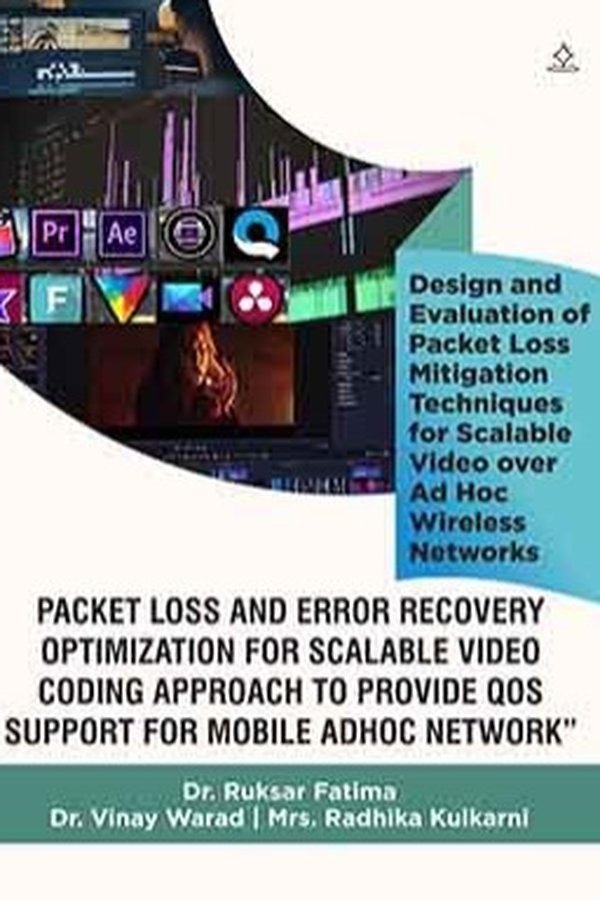
DESIGN NO. 6309794 · GRANTED 19 SEP 2023Six patent applications filed with the Indian Patent Office spanning image retrieval, video coding, secure transmission, D2D communication, retinopathy diagnostics, and deep neural network-based watermarking.
Efficient feature extraction and classification methods for content-based image retrieval systems.
APP. NO. 202341019444A · 31 MAR 2023Enhanced Quality of Service (QoS) support for mobile ad hoc networks.
APP. NO. 202341019477A · 31 MAR 2023Minimizes distortion during secure transmission of sensitive data.
APP. NO. 202341019329AImage processing techniques to diagnose diabetic retinopathy from fundus images.
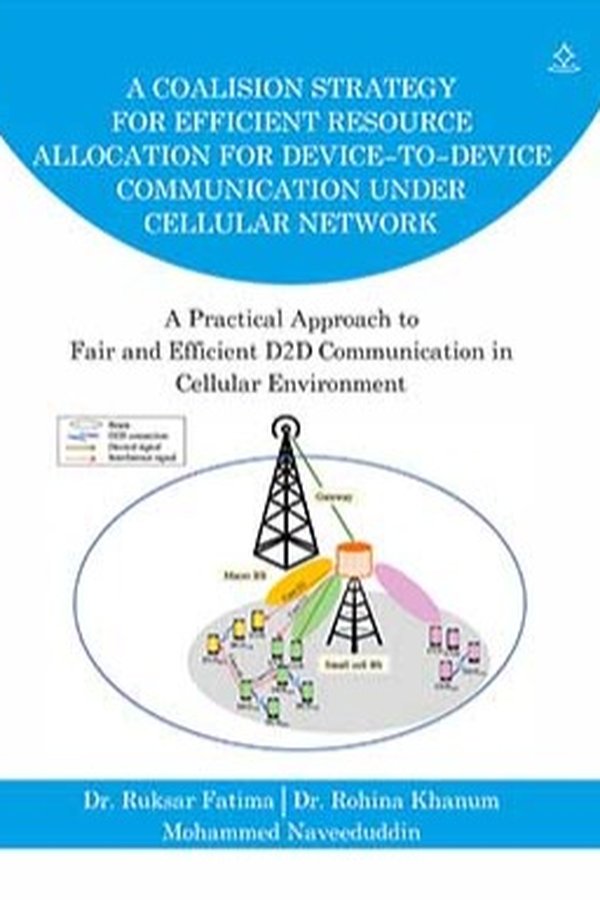
APP. NO. 202211002020A · 11 FEB 2022Efficient resource allocation under cellular networks for D2D communication.
APP. NO. 202111049557A · 26 NOV 2021Beyond presenting papers, Dr. Fatima has served on 100+ international Technical & Program Committees across IEEE, SPIE, IGI Global, and university-hosted conferences in 30+ cities worldwide — from Tokyo and Singapore to Paris, Zurich, Vancouver, and Sydney.
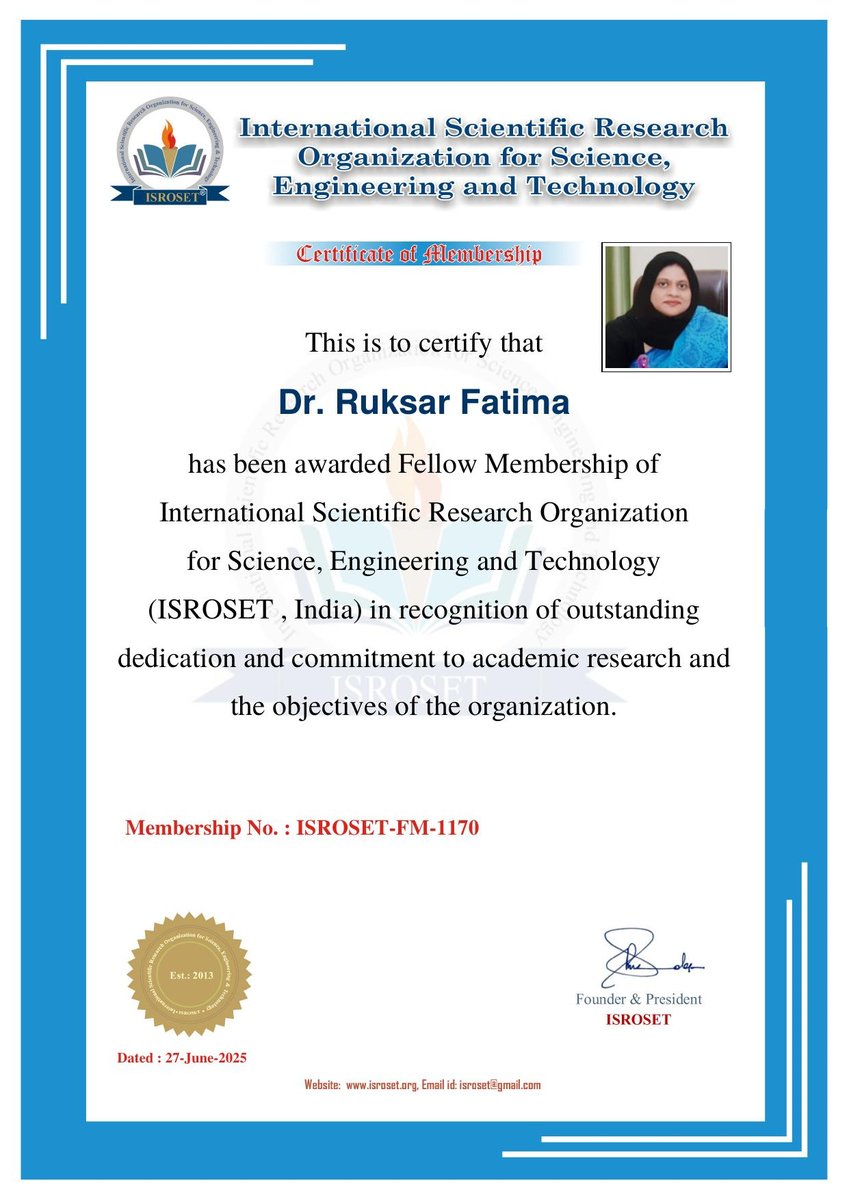
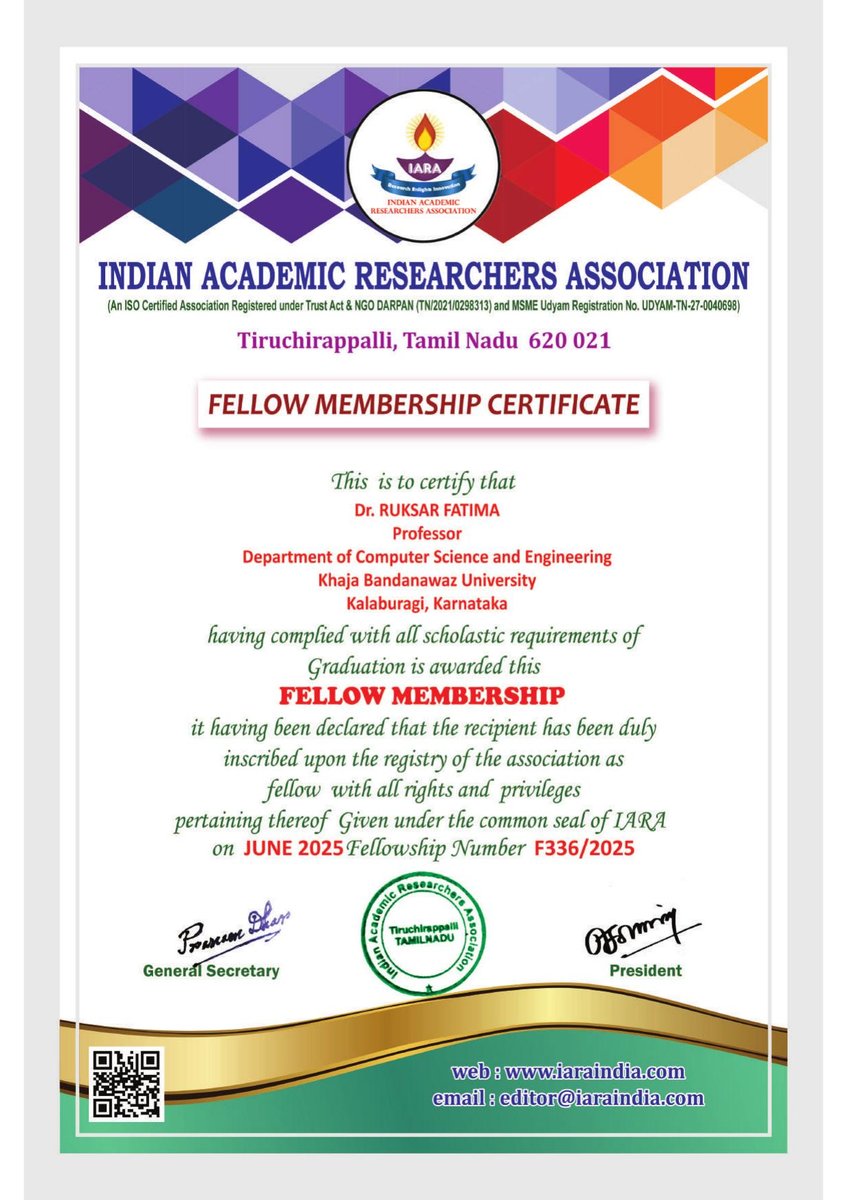
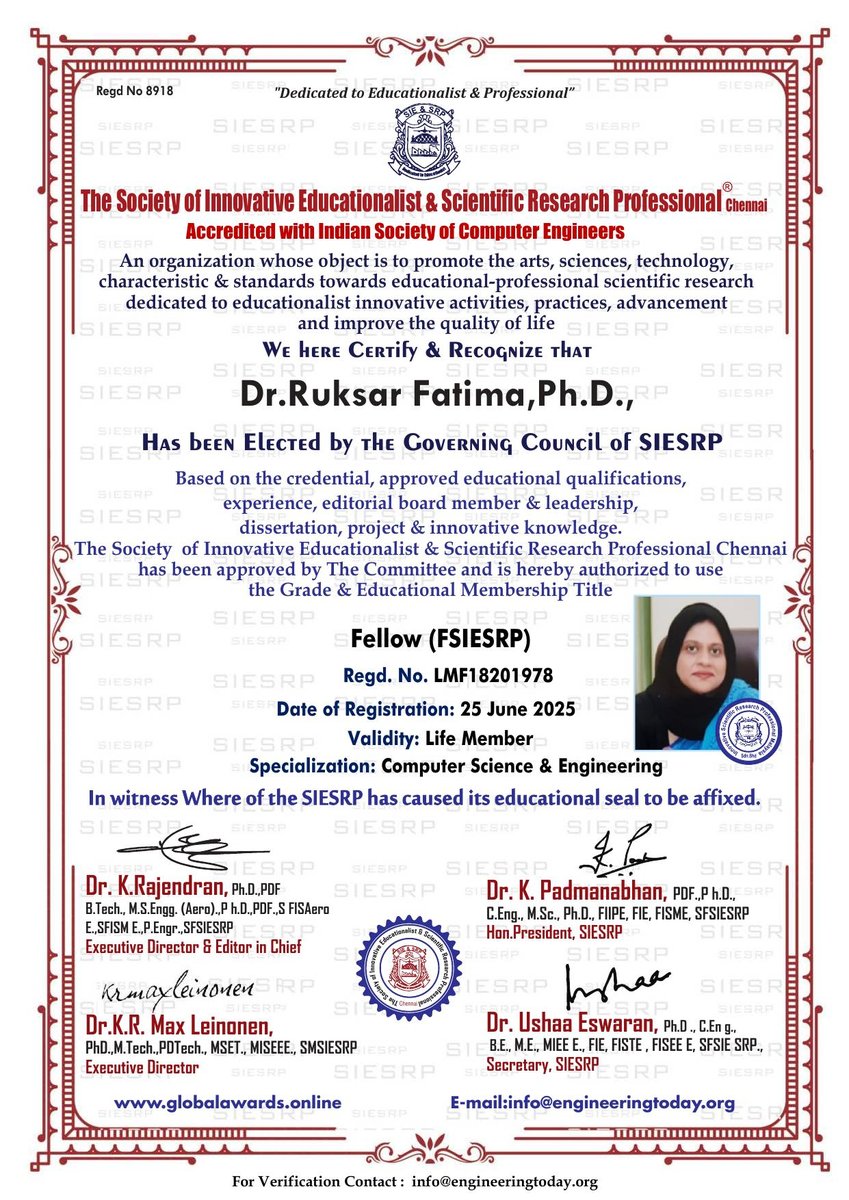
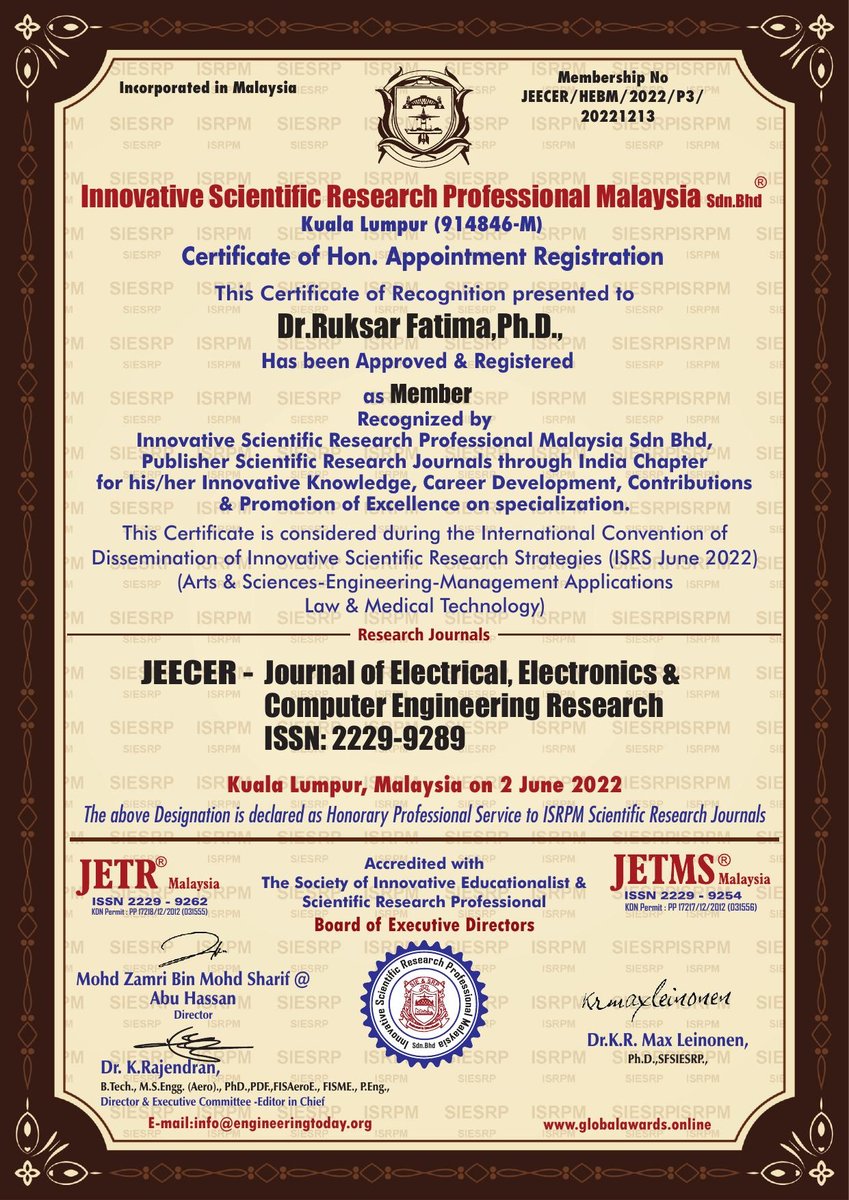
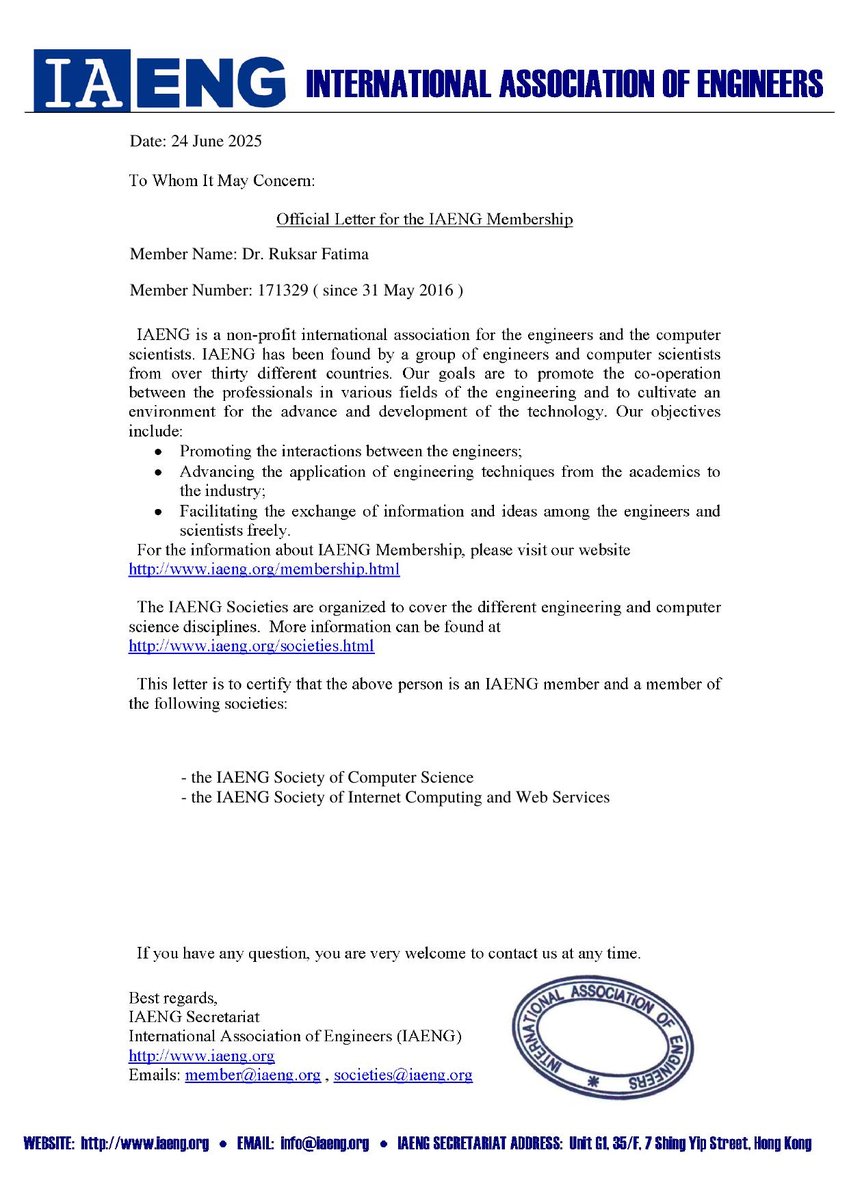
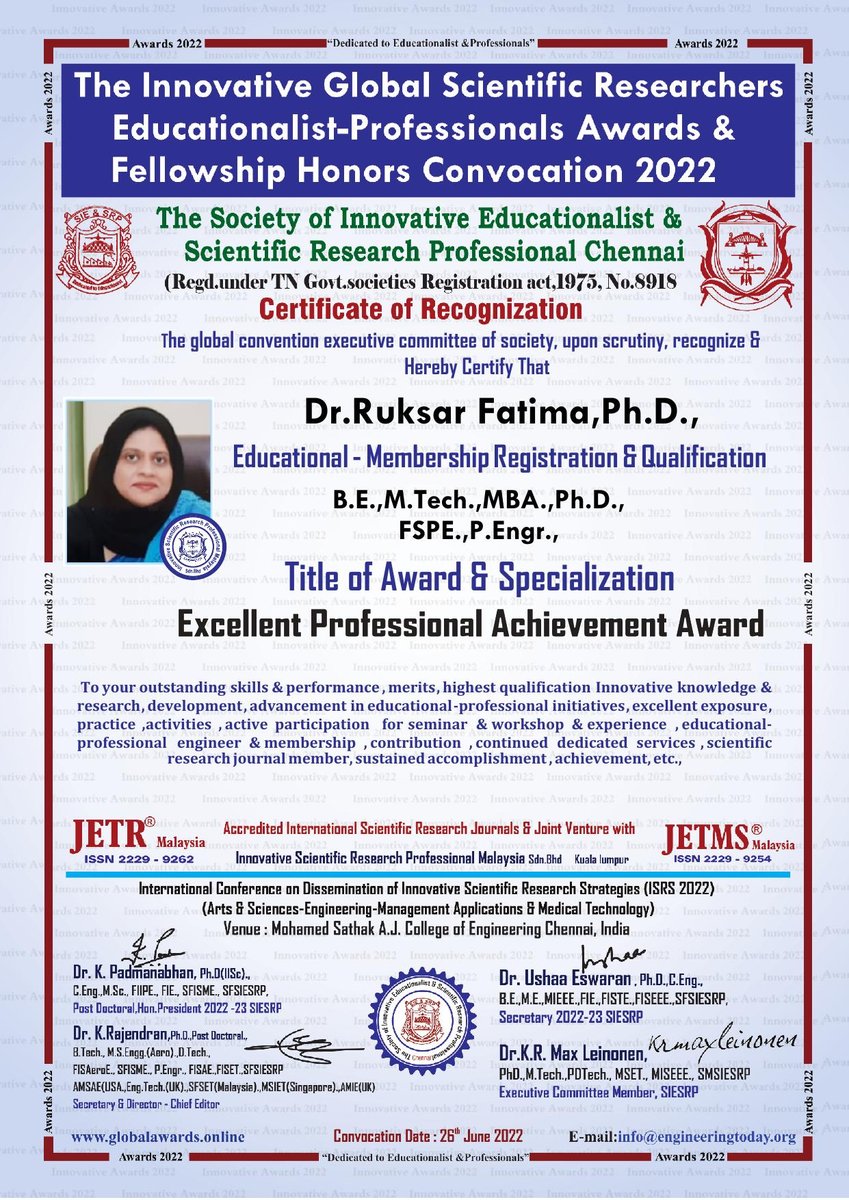
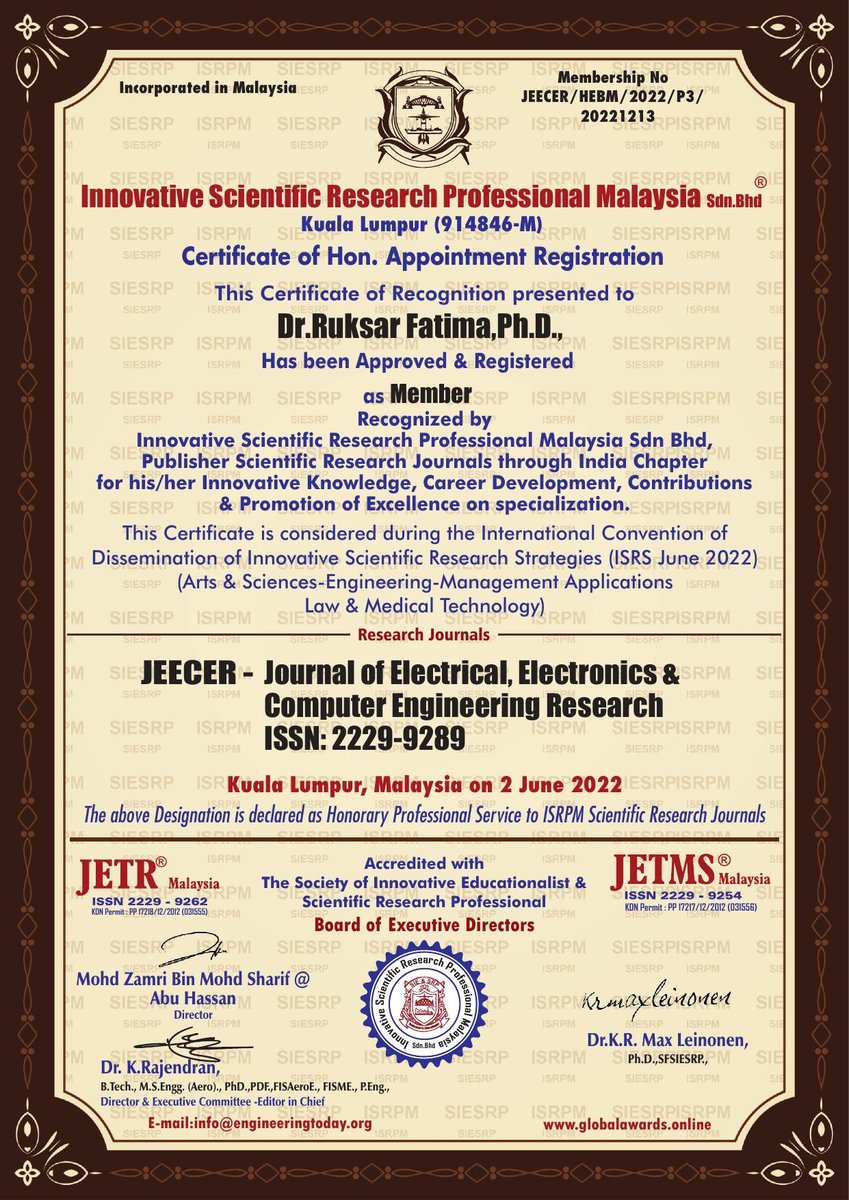
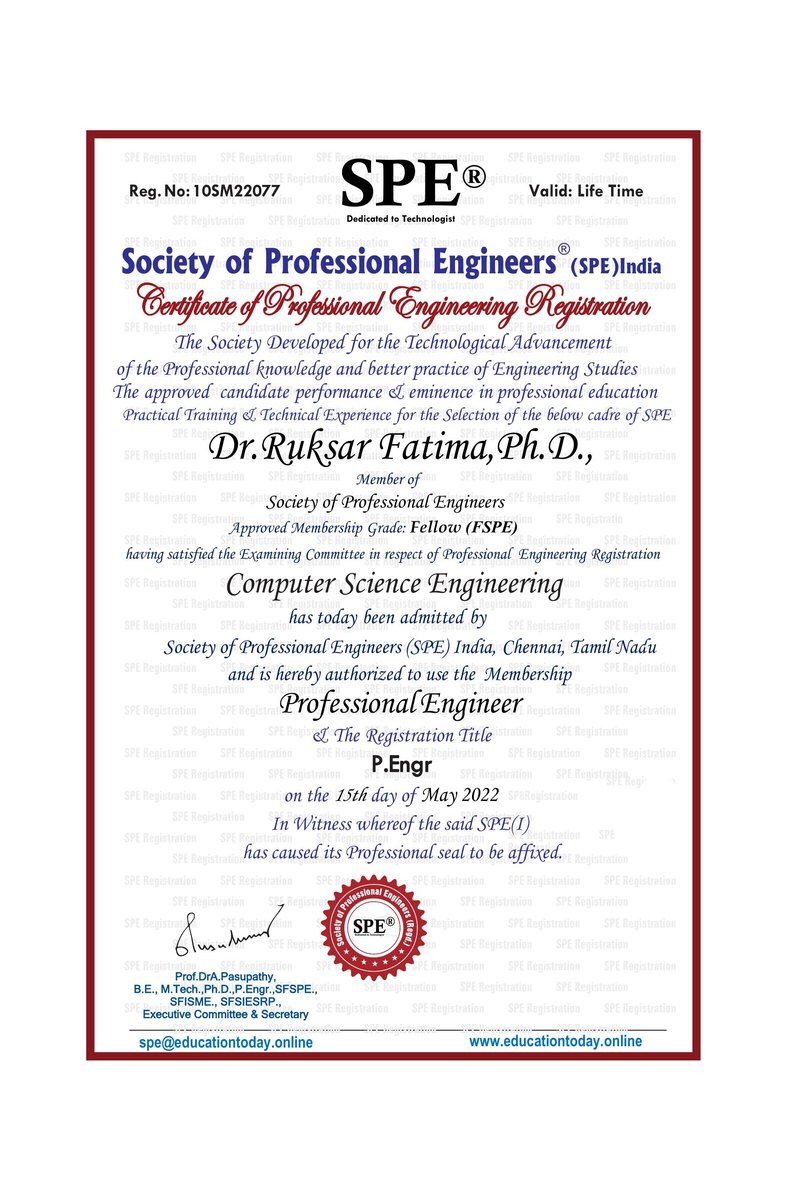
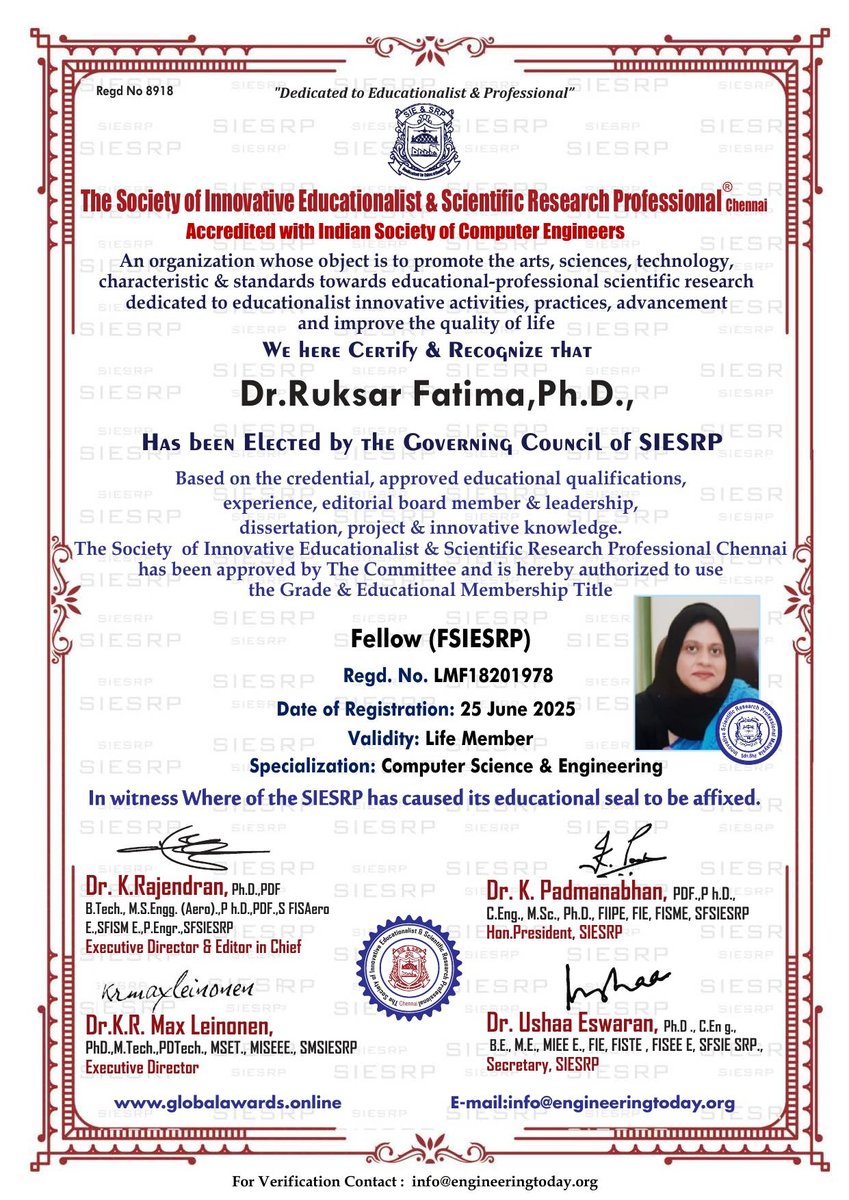
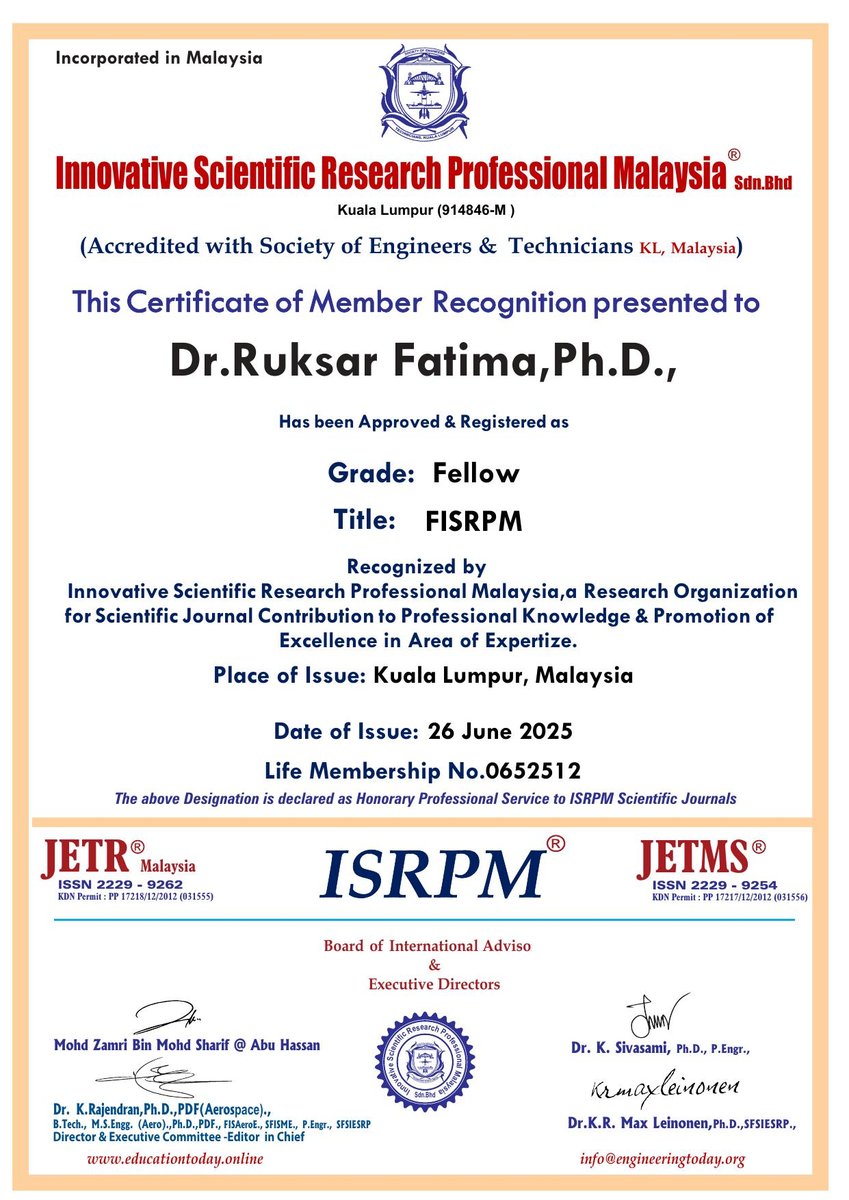
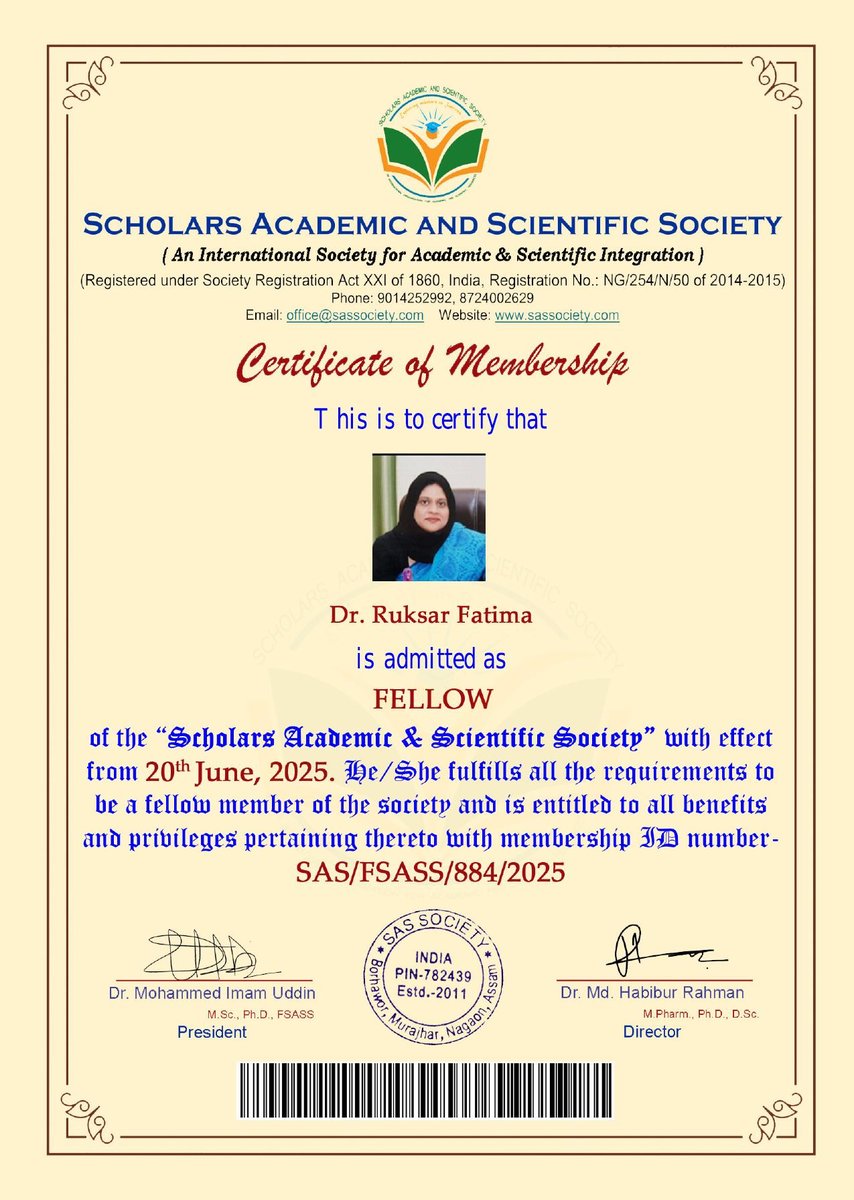
Official membership certificates from international professional bodies — hover to pause the carousel, click any certificate to view in full.


Doctoral candidates and postgraduate researchers mentored across medical image processing, IoT, federated learning, and computer vision.
Image Processing — vessel segmentation and adaptive Conditional Random Field models for diabetic retinopathy detection from fundus images.
VTU Belagavi · Registered 2016 · Final viva completed
Image Processing — adaptive steganography (DIDC model) and channel-transformation-based color image steganography for secure data transmission.
VTU Belagavi · Registered 2016 · Final viva completed
Image Processing — efficient content-based image retrieval using integrated dual deep convolutional neural networks.
VTU Belagavi · Registered 2017 · Final viva completed
Image Processing — research in image-processing pipelines including applications in cognitive radio and wireless sensor networks.
VTU Belagavi · Registered 2017 · Final viva completed
Image Processing — cooperative game theory for spectrum sensing and resource allocation in cognitive radio wireless sensor networks; D2D communication in LTE-Advanced.
VTU Belagavi · Registered 2017 · Final viva completed
Image Processing — saliency detection using spatiotemporal fusion and video encoding; attribute-based encryption frameworks for cloud computing.
VTU Belagavi · Registered 2017 · Final viva completed
Image Processing — reliable handoff mechanism for energy-efficient IoT WSN; machine-learning-based handover for heterogeneous wireless networks.
VTU Belagavi · Registered 2018 · Final viva completed
Advanced DCNN architectures for watermark-image smoothening, denoising, and adaptive video watermarking via deep learning.
Khaja Bandanawaz University · Registered June 2020 · Final viva completed
Machine Learning Performance Assessment and AI-Based Hybrid Frameworks for Botnet DDoS Attack Detection.
Khaja Bandanawaz University · Colloquium completed
A Robust Hybrid Deep Learning-Based Image Forensic Framework for Detecting AI-Generated and Manipulated Images.
Khaja Bandanawaz University · Course work completed
A Multi-Modal Deep Learning Framework for Multi-Crop Disease Detection and Recommendation System for Sustainable Agriculture.
Khaja Bandanawaz University
Awarded scholars sourced from Annexure I — Ph.D. Supervision record verified from official supervisor logs.
Khaja Bandanawaz University · Department of Computer Science & Engineering
A research group focused on translating advances in deep learning, computer vision, and wireless communications into practical impact for healthcare and engineering education. The lab supervises doctoral candidates, hosts visiting researchers, and collaborates with hospitals and industry partners across India and abroad.
Centre for Artificial Intelligence and Intelligent Systems
Director: Prof. Ruksar Fatima
A platform for advancing research and innovation in AI, Machine Learning, Data Science, Cloud Computing, Computer Vision, Healthcare Informatics, and Intelligent Decision Support Systems. CAIIS serves interdisciplinary research, industry collaboration, student mentoring, and technology development — developing intelligent, ethical, and impactful solutions to real-world challenges in healthcare, education, agriculture, cybersecurity, and smart systems.
To become a centre of excellence in Artificial Intelligence and emerging computing technologies — fostering innovation, research excellence, and societal impact.
Intelligent recruitment systems using machine learning to surface best-fit candidates from large applicant pools.
Role-based secure healthcare data management with built-in analytics for clinical decision support.
Automated attendance tracking through computer vision for academic and corporate environments.
AI-enabled customer relationship management solutions tailored to manufacturing-unit workflows.
Predictive project analytics for construction and industrial environments — schedule, cost, and risk forecasting.
Terrain-aided navigation using SAR / InSAS DEM fusion techniques for autonomous underwater operations.
The lab actively welcomes researchers, students, and industry collaborators:
Academic Institutions · Healthcare Organizations · Government Agencies · Startups · Technology Companies
Reach out for research opportunities, internships, project guidance & research-paper / patent collaboration →Combining Segment Anything Model (SAM), vision transformers, and federated learning to build fair, generalizable melanoma detection across underrepresented skin tones.
Adapting general-purpose vision foundation models to clinical imaging tasks with limited annotated data, focusing on explainability and clinician-in-the-loop workflows.
Frameworks for training diagnostic models across institutional boundaries without sharing raw patient data — combining differential privacy and secure aggregation.
Resource-aware scheduling and serverless function placement for medical IoT workloads that span device, edge, and cloud tiers.

Mobile applications integrating large multimodal models with sensor data to give context-aware plant-care guidance for small-holder farmers.
Lightweight, online-trainable IDS models suited to resource-constrained IoT gateways; emphasis on adversarial robustness.
Developing explainable AI solutions for early disease detection, precision diagnostics, and intelligent healthcare innovation using deep learning and computer vision.
Building transparent, fair, responsible, and human-centered artificial intelligence for high-impact decision making across healthcare, finance, and governance.
Enabling collaborative intelligence through secure, decentralized, and privacy-aware machine learning with differential privacy and blockchain-assisted systems.
Building next-generation intelligent networks for secure, scalable, and connected digital ecosystems including SDN, IoT, and AI-driven network optimization.
Empowering sustainable agriculture through artificial intelligence, computer vision, and precision farming technologies for crop monitoring and disease diagnosis.
Securing digital communication through intelligent information hiding, cyber defense, digital forensics, and watermarking technologies.
Endorsements received in writing from industry leaders and alumni, on official company letterhead. Click any card to view the original letter.
Open to research collaborations, doctoral mentorship, editorial assignments, keynote invitations and consultancy in image processing, medical AI, and IoT — based in Gulbarga, working across India and internationally.